OHBM 2026 KEYNOTE SPEAKERS
Join us to hear from internationally recognized leaders shaping the future of human brain mapping. These featured speakers are the core of our Annual Meeting and will speak onsite at OHBM 2026 in Bordeaux, France from June 14 - 18, 2026
Talairach Speaker


The Glymphatic System
Sunday, June 14: 17:30 - 19:30
Palais 2 l’Atlantique | Room: Agora
The glymphatic system is a brain-wide fluid transport pathway that clears metabolic waste from the brain. It is most active during sleep and largely suppressed during wakefulness. This talk will examine how brain-state–dependent changes regulate glymphatic activity, the mechanisms driving fluid flow during sleep, and how impaired glymphatic function with aging may contribute to neurodegenerative disease.
Keynote Speakers

Dissecting Neurodegenerative Diseases Through Brain Imaging and Multiomics in Preclinical Models
Tuesday, June 16: 10:30 - 11:15
Palais 2 l’Atlantique | Room: Agora
Neurodegenerative diseases are closely linked to disrupted brain energy homeostasis, but how this contributes to disease progression is still not fully clear. In this talk, I will present an integrative approach that combines brain imaging with multiomic analyses in preclinical models. Using diffusion tensor imaging, we detect early disruption of hippocampal–prefrontal connectivity before disease onset. Multiomic analyses reveal coordinated changes in lipid metabolism and oligodendrocyte function, pointing to impaired myelin integrity as a key feature. We focus on adenosine signaling as a central regulator. Pharmacological inhibition of ENT1 restores metabolic homeostasis, improves network connectivity, and reduces pathological changes. These findings support a model in which energy imbalance drives neurodegeneration across cell types, and highlight new opportunities for disease-modifying intervention.
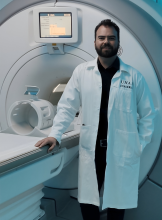
Understanding Neuromodulation in Substance Use Disorders: A Bidirectional, Cross-Species MRI Approach
Tuesday, June 16: 14:30 - 15:15
Palais 2 l’Atlantique | Room: Agora
While transcranial magnetic stimulation (TMS) is now approved in several countries for treating substance use disorders (SUDs), and other neuromodulation modalities are under active investigation, significant challenges remain. Importantly among these are elucidating the underlying mechanisms of action and refining protocols to optimize clinical outcomes. Today, modern MRI systems and advanced analytical tools offer a powerful cross-species bridge. By integrating imaging data from both preclinical rodent models and human trials, we can create a bidirectional feedback loop that enhances both our foundational models and our clinical interventions. In this talk, I will present my lab's work leveraging this translational MRI approach to investigate how SUDs alter brain structure and function, and discuss how these insights can potentially drive the clinical refinement of neuromodulation therapies in humans.
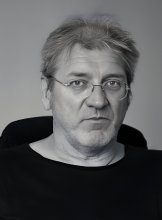
From Brain Maps to Brain Twins
Thursday, June 18: 10:30 - 11:15
Palais 2 l’Atlantique | Room: Agora
Over the past two decades, neuroimaging has transformed how we describe the brain, yielding ever-richer maps of structure, function, and connectivity. Yet description alone does not explain, and the questions we increasingly face are mechanistic and individual: why does this brain generate these seizures, and what will this intervention do?
Virtual brain twins address this gap by augmenting empirical brain maps with generative mechanism. Epistemically, a digital brain twin is neither a simulation nor a statistical model alone, but a coupling between three elements: (i) a personalized referent — the individual brain, characterized through multimodal imaging; (ii) a generative mechanistic brain model, expressing network activity on the subject's connectome; and (iii) a bidirectional inference loop linking the two, inverting the model against individual data to estimate latent parameters with quantified uncertainty. This triad of referent, mechanism, and inversion distinguishes a twin from a map or a free-running simulation, and grants it clinical actionability.
I illustrate the workflow through the Virtual Epileptic Patient (VEP), developed for drug-resistant focal epilepsy. The connectome is reconstructed from DTI and co-registered with anatomical MRI and CT; region-specific neural mass models are placed on this connectome; and epileptogenicity of a brain region is estimated by Bayesian inversion using Hamiltonian Monte Carlo. The inference yields full posteriors and inference diagnostics, essential where neurosurgical decisions are irreversible. VEP has just finished prospective clinical evaluation (EPINOV).
The same workflow generalizes to healthy aging, neurodegeneration, and schizophrenia, and is deployed through EBRAINS, the European digital research infrastructure for neuroscience.

Reliability Across the Eras: From Early Discoveries to Population Neuroscience
Wednesday, June 17: 10:30 - 11:15
Palais 2 l’Atlantique | Room: Agora
Neuroimaging—from small-sample beginnings to the current population-based, big-data era—has been defined by a constant pursuit of reliability. This keynote will revisit pivotal lessons from the reproducibility crisis and the subsequent shift toward open science and collaborative data sharing, describing how meta-analysis played a central role in this evolution. I will present new advances in image-based meta-analysis and demonstrate how Large Language Models (LLMs) are improving study annotation and functional decoding. Finally, recent discoveries from the ABCD Study illustrate how big data and multivariate analyses are currently moving beyond simple brain-behavior correlations toward a nuanced understanding of how social determinants of health shape the human brain. By reflecting on where the field has been, we can better navigate toward a robust, socially aware future for neuroimaging.

Cross-species neuroimaging: From comparative to clinical
Monday, June 15: 15:45 - 16:30
Palais 2 l’Atlantique | Room: Agora
Neuroimaging is reshaping comparative neuroscience. Historically, the field has either pursued detailed analyses in a small number of species or relied on coarse summary measures, such as brain or neocortex size, across larger samples. By contrast, neuroimaging enables high-throughput acquisition of multimodal, high-resolution data across diverse species at moderate cost. This shift opens new questions, but also demands new frameworks for quantitatively comparing neural systems that differ profoundly in size and internal organization. In this keynote, I will present analytical approaches developed in our lab to meet these challenges and show how they yield new insights into the evolution of the human brain.
These comparative frameworks also provide a foundation for addressing a central challenge in clinical neuroscience: translation from animal models to humans. The mouse, with its genetic tractability, has become a dominant model organism, yet cross-species alignment remains a major obstacle. I will discuss our recent mouse-to-human comparative models and demonstrate how they can be used to link variation across mouse lines to human patient data.

Taking time seriously
Wednesday, June 17: 14:45 - 15:30
Palais 2 l’Atlantique | Room: Agora
Understanding the neural basis of cognitive processes that unfold across multiple stages requires tracking these processes at a fine temporal scale. Speaking is an example of such an activity: It starts with the access of information in long-term memory, finishing with the execution of motor programmes. I will illustrate the value of temporal information to further our understanding of the neural basis of speaking, using electrophysiology (in combination with tractography) in both neurologically healthy and brain-lesioned participants. However, as I will discuss, taking temporal information seriously in our research also brings into focus important conceptual problems, including those related to operationalisation and abstraction. These issues have implications for multiple domains of cognition beyond speech production.

Mapping the Human Brain in Naturalistic Environments
Monday, June 15: 10:30 - 11:15
Palais 2 l’Atlantique | Room: Agora
This talk presents findings on human brain activity during naturalistic, real-world behavior. By integrating synchronized scalp EEG, intracranial recordings, and wearable sensors, we reveal how neural dynamics support memory, navigation, and emotion during active experience. These findings point toward a new brain mapping approach that can be deployed in real-world, ambulatory settings and directly inform targeted neuromodulation therapies.